Regulation · 3 min
Brazil court orders 7 betting firms to freeze refund money
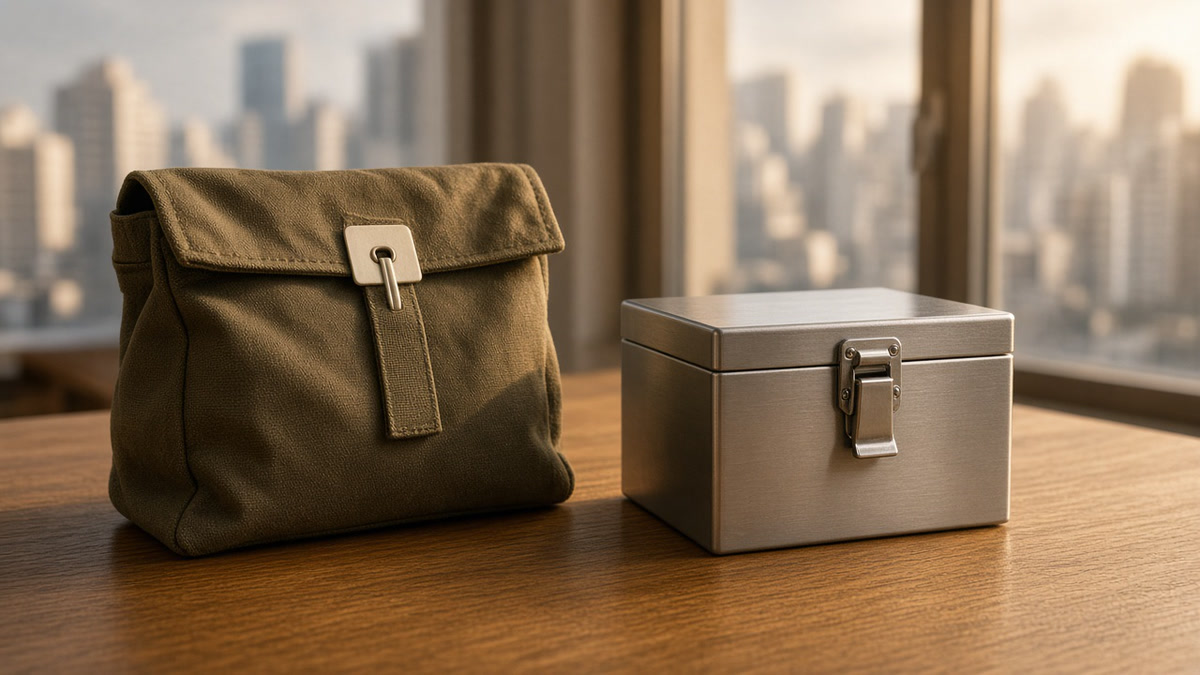
A sealed bank-deposit bag and a small strongbox on an office desk in warm afternoon light. · Bonusjungle illustration
A federal judge in São Paulo has ordered seven former betting operators, Blaze among them, to keep the money owed to their players segregated and to prove their account balances with bank records within two days. Each company faces a R$50,000 daily fine if it does not comply.
A federal judge in São Paulo has ordered seven betting companies shut down by Brazil's ban to leave the money owed to their players where it is, and to show the court exactly how much there is. Judge Denise Aparecida Avelar of the 6th Federal Court in São Paulo issued the order on Friday 23 October 2026 in a lawsuit brought by the Attorney General's Office (AGU), the federal government's legal service. Blaze, whose Brazilian brand rights belong to Foggo Entertainment, is the only one of the seven named in reports of the decision.
Newest casinos
Added:
Welcome offer: 400% up to €8,000
35× B+D · €25
Added:
Welcome offer: 450% up to €9,000
35× B+D · €25
Added:
Welcome offer: 100% up to €500
35× bonus · €20



18+ · Affiliate links. We may earn a commission.
What the order requires
The judge set two obligations, with a fine of R$50,000 per day for each company that fails to comply:
- keep the funds intended for player refunds segregated "in their respective transactional accounts", and not use or move them for any purpose other than those the law allows;
- within two days, report the balances in the transactional accounts that hold players' money, with proper bank documentation identifying the accounts and the amounts available.
Explaining why she acted, the judge wrote (our translation): "The persistence of the omission represents a concrete risk that the closure of activities will take place without adequate oversight of where the funds go, compromising the protection of bettors' assets." She also cited Article 8, §1 of Provisional Measure (MP) 1.394/2026, the measure behind the ban, under which money set aside for refunds must stay segregated and cannot be used for anything else.
Why the AGU went to court
According to the AGU, the companies missed the government's deadlines for winding down. They were supposed to report how much each registered player had with them, list every brand they ran and arrange the refunds. The Finance Ministry's rules had set 7 October for reporting final balances; Valor Econômico quotes the AGU as saying the deadline to send the information and secure the refunds "ran out on the 12th".
What R$159 million does and does not mean
The government estimates that at least R$159 million belonging to players was still sitting in operators' accounts after the ban. That figure does not cover these seven. According to Valor, it does not include money held by the companies that never sent their data, which are the ones the AGU has now sued. How much the seven hold is exactly what the court has asked them to document.
Updated figures from the operators, reported by Agência Brasil and cited by Focus Gaming News, spread the outstanding money across about 22.5 million players and 70.5 million accounts, with 90% of those accounts holding less than R$1.
An earlier order in Rio
On 16 October, the 21st Federal Court in Rio de Janeiro gave a similar order against Select Operations, the company behind MMAbet, BetVip and Papigames. That was the first ruling in a set of eight AGU lawsuits, with a R$50,000 daily fine initially capped at R$1 million. Focus Gaming News lists the eight companies the AGU sued, Foggo Entertainment among them. Reports of the São Paulo order name only Blaze among the seven.
Foggo told Valor it would not comment on the details of the case but is "in direct contact and cooperation with the competent bodies and partner financial institutions" to complete the refund process. Valor also reports a Federal Police inquiry into whether a lawyer is a hidden partner in Blaze; Foggo says he "acted exclusively as a user of the platform".
What it means for players
The order does not pay anyone yet, and it sets no payout date. In our view, it is a safeguard: the money is meant to stay put and on the record while the refunds are sorted out, rather than leaving with a company that is closing down. Refunds still go through the banks and Caixa, not through the betting sites. Our explainer on how unpaid balances come back covers that route, and our earlier story on the AGU's plan to sue eight firms over refund data has the timeline.
If you are still owed money, check only official government and Caixa channels such as Brasil sem Bets, and never pay a "release fee". A fake Brasil sem Bets site has already tried that. For the background to the ban, see how the online casino ban took shape.
Sources
- Valor Econômico, "Justiça bloqueia recurso de bet que a PF suspeita ser de amigo de Flávio Bolsonaro", 23 October 2026 (main source: order, judge, court, fine, two-day deadline, quote, AGU deadline wording, R$159m caveat, Foggo statement)
- TMC, "Justiça congela contas de 7 bets e coloca Blaze no centro de investigação da PF", 23 October 2026
- BNLData, "Federal court orders 7 betting platforms to return R$ 159 million after betting was banned", 24 October 2026
- Valor Econômico, "Justiça determina que empresa de bet informe saldos de apostadores para resgate", 16 October 2026 (Select Operations order, Rio)
- Focus Gaming News, "AGU aciona Justiça contra 8 empresas de apostas por reter dados de reembolso de clientes", 19 October 2026 (the eight companies sued; account data via Agência Brasil)