Analysis · 4 min
The week regulators went after the money, not the ads
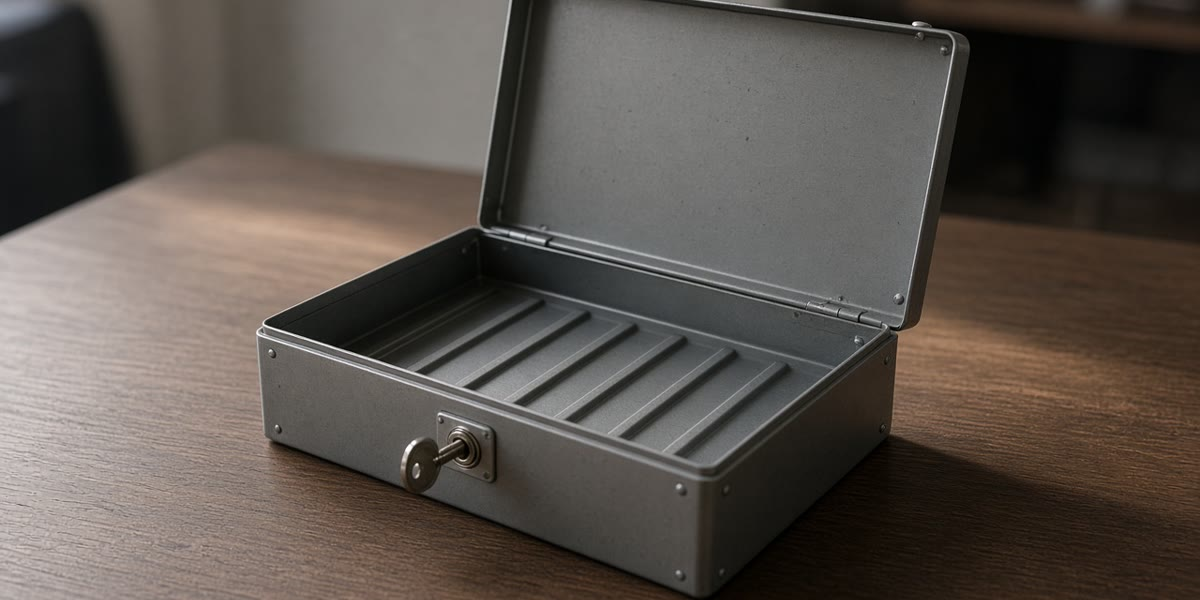
An open, empty steel cash box with a key in the lock on a wooden desk. · Bonusjungle illustration
Brazil, the Netherlands, Norway and Curaçao all acted this week, and none of it was about advertising. Refund data, deposits, payments and the licence check players rely on: our column on why the money side is where player protection now happens.
Opinion · Scribe column. This column draws only on four stories we have already reported; follow the links for the full facts and sources.
Gambling regulation usually makes the news when it is about advertising: a banned sponsor, a pulled campaign, a celebrity told to stop. This week's stories were different. Four regulators, from South America to Scandinavia to the Caribbean, spent the week on something less visible and, for players, more important: where the money goes, whether it comes back, and how you can tell who is allowed to hold it.
Newest casinos
Added:
Welcome offer: 100% up to €500
35× bonus · €20
Added:
Welcome offer: 100% up to €750 + 50 no-wager spins
35× bonus · €20
Added:
Welcome offer: No Welcome Offer



18+ · Affiliate links. We may earn a commission.
Brazil: the refunds come before the court case
When Brazil's licensed betting sites went dark, the refund of player balances did not go back through the sites. Under the shutdown rules of Provisional Measure 1.394/2026, the banks that held the operators' accounts pay it out, and they can only do that if they know who is owed what. That is why the Attorney General's Office (AGU) says it will take eight former operators to court: they missed the 7 October deadline to send banks each player's balance by CPF, together with the bank account the player used to deposit. Operators now report R$159 million still to be returned, across 22.5 million players and 70.5 million accounts.
Most of those accounts hold less than R$1. That makes it tempting to call this a rounding error. It is not. The government's threatened lawsuit is not about a slogan or a banner. It is about data, because without it a refund system cannot run. Our report on the AGU's planned lawsuit has the calendar: banks from 9 to 14 October, Caixa Econômica Federal from 14 October. For how it started, see our report on the refunds when the sites went dark.
The Netherlands: your deposit is not bonus money
The Dutch case is smaller and, in a way, sharper. The Netherlands Gambling Authority (Ksa) called licensed operator 711 to account for requiring some customers to stake money they had deposited before they could withdraw it. According to 711, the procedure was part of its anti-money-laundering measures, the Ksa said. The regulator's answer was plain: play-through conditions are allowed only together with a bonus, and an operator may not require a deposit to be wagered, not even once.
We think the Ksa drew the line in the right place. A source-of-funds check looks at one case and should end quickly. A standing rule that makes everyone using a given payment method gamble their own money before cashing out is something else. The Ksa announced no fine. It did say that operators were told about these payout rules in 2024 and that breaches like this should no longer happen. Our report on the 711 case sets out the full rule.
Norway: blocking the door, and the payment
Norway's Lotteritilsynet has sent DNS-blocking notices to 62 more websites, from Stake and Betway to the prediction markets Polymarket and Kalshi. A DNS block sounds like a technical measure about access, and it is. But the regulator's own criteria for who gets blocked include attempts to get around Norway's ban on banks processing payments to unlicensed gambling companies. According to Lotteritilsynet, Norwegian banks are to stop stakes and winnings going to and from illegal gambling companies, and it warns that players risk not receiving their winnings.
That warning is the point. Norway is not mainly arguing about how these sites present themselves. It is closing the route the money takes. The sites can reply until 15 October, director Atle Hamar told TV 2, and being on the notice list is not a block. Our report on the 62 DNS-block notices has the full list and how blocking works.
Curaçao: the check that players use
The fourth story is about trust rather than cash, but it ends in the same place. The Curaçao Gaming Authority (CGA) will not bring back the online licensing portal that an outsider used for about nine months, and it says the availability of the digital seal casino sites display to prove a Curaçao licence will be affected. Existing licences remain valid. A replacement way to show that a domain is licensed has been promised but, when we reported it, not yet published.
The seal is the main way a player can check a Curaçao licence before handing over money. A regulator can lose that tool without any advertising rule changing at all. Our report on the CGA portal and seal explains what a seal should show and what a missing one does and does not mean.
The common thread
Put the four together and a pattern shows. Brazil is chasing the data that unlocks refunds. The Netherlands is protecting the right to withdraw a deposit. Norway is cutting off payment routes as well as web addresses. Curaçao's problem is the tool that tells players whether a site is licensed at all.
We would not overstate it. These are four separate regulators with four separate problems, and one week is not a trend line. But it is a useful reminder of what player protection looks like when it works: less about what a casino is allowed to say, more about whether your money can get out again. It is also why withdrawal terms are among the published terms we track in the Vault.
If you only read one part of a casino's terms, read the withdrawal rules.
18+. If gambling has stopped feeling like a pastime, see responsible play.
Related
- Brazil to sue eight betting firms over refund data
- Brazil's licensed betting and casino sites go dark: how unpaid balances come back
- Dutch regulator calls out 711 for making players wager deposits
- Norway warns 62 more gambling sites of DNS blocks
- Curaçao retires breached portal; licence seal affected
- Responsible play
- News
Sources
- Brazil to sue eight betting firms over refund data, 11 October 2026
- Brazil refunds after the sites went offline
- Dutch regulator calls out 711 for making players wager deposits, 10 October 2026
- Norway warns 62 more gambling sites of DNS blocks, 11 October 2026
- Curaçao retires breached portal; licence seal affected, 10 October 2026
- Secom release of 10 October 2026, as carried by CNN Brasil (AGU lawsuit announced; 7 Oct deadline; R$159m; 22.5m players, 70.5m accounts; banks 9–14 Oct; Caixa from 14 Oct)
- Brasil sem Bets (Governo Federal)
- Kansspelautoriteit: 711 aangesproken op rondspeelverplichting, 9 October 2026
- Kansspelautoriteit: Uitbetaling van spelerstegoeden
- Lotteri- og stiftelsestilsynet: Blokkering av ulovlige pengespillsider
- TV 2: 62 pengespill blokkeres denne høsten, 8 October 2026
- Curaçao Gaming Authority: CGA to Transition to a New Regulatory Platform, 7 October 2026 (PDF)
- Curaçao Gaming Authority: Certification Policy