Regulation · 3 min
Philippine central bank curbs bank cash-ins to Coins.ph
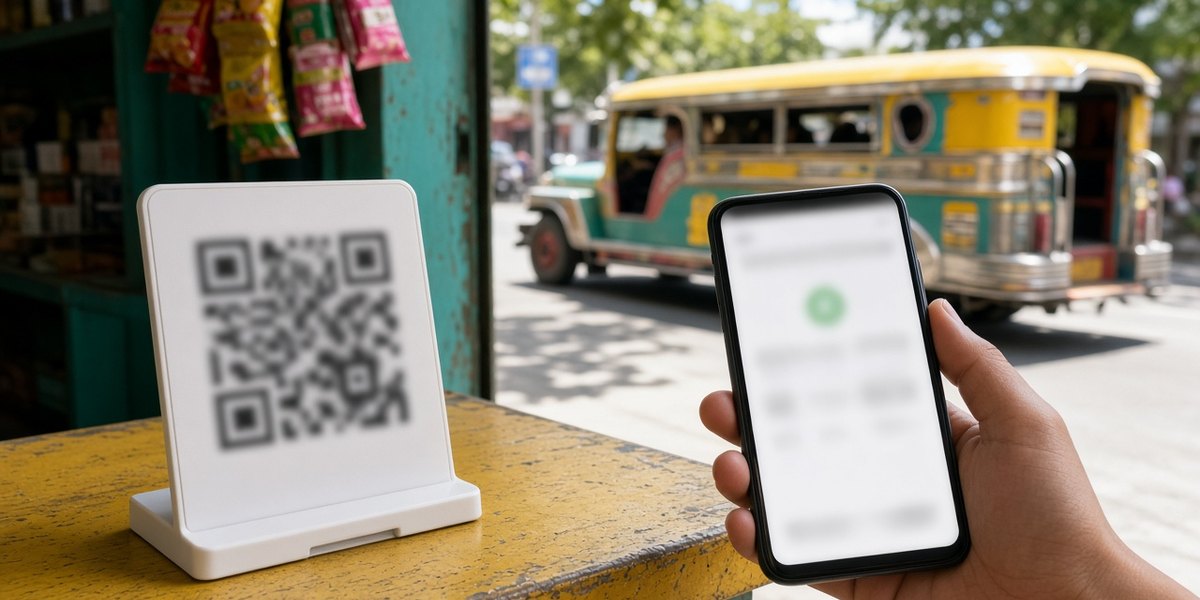
A hand holding a phone near a QR payment stand at a small Manila shop counter. · Bonusjungle illustration
The Bangko Sentral ng Pilipinas has partly suspended the e-money firm behind Coins.ph's peso wallet, blocking bank cash-ins. CoinDesk, citing unnamed sources, says the central bank is pursuing action over offshore gambling transactions. Coins.ph denies serving such operators.
Coins.ph, the largest crypto platform in the Philippines, can no longer take peso cash-ins from banks and e-wallets after the country's central bank, the Bangko Sentral ng Pilipinas (BSP), partly suspended the company that runs its peso wallet. CoinDesk, citing two unnamed people, reported on 13 October (US time) that the BSP is pursuing punitive action over the platform allegedly serving restricted offshore gambling companies. Coins.ph denies that it knowingly serves gambling operators, and the BSP has not commented publicly.
Newest casinos
Added:
Welcome offer: 400% up to €8,000
35× B+D · €25
Added:
Welcome offer: 200% deposit bonus
35× bonus · Not printed
Added:
Welcome offer: 100% up to €500
35× bonus · €20


18+ · Affiliate links. We may earn a commission.
What is documented
According to BitPinas, which cites an advisory from Philippine Payments Management Inc. (PPMI Advisory No. 2026-0929-029), the BSP's Monetary Board ordered a partial suspension of DCPay Philippines Inc. under Monetary Board Resolution No. 839 in late September. DCPay is the licensed e-money issuer behind the Coins.ph peso wallet. It can no longer receive inbound transfers over InstaPay or PESONet, the Philippines' two interbank transfer systems, so cash-ins from banks and other e-wallets bounce.
Coins.ph says cash-ins and QR Ph collections are unavailable, while cash-outs, bill payments, merchant QR Ph payments and crypto trading continue. Its crypto business runs under a separate virtual asset service provider licence held by Betur Inc., so the suspension hits the peso on-ramp rather than trading itself. Neither the BSP nor PPMI has publicly given a reason for the suspension.
What is reported, and denied
CoinDesk cites two people with knowledge of the situation as saying the BSP is pursuing punitive action because Coins.ph allegedly handled business for restricted offshore gaming and gambling companies. One of them said the infractions could be serious enough for the company to lose its licence. According to the same people, several gambling firms moved to Coins.ph after the BSP ordered supervised e-wallets in August 2025 to remove in-app links to gambling sites; a third person told CoinDesk the move gave them access to crypto and stablecoins to pay offshore partners. CoinDesk also reports that the chief compliance officer and two senior anti-money-laundering staff left this year, and that Coins.ph, with more than 18 million customers, handles about 75–80% of peso-to-stablecoin liquidity in the country.
Coins.ph rejects the gambling claim. "Coins.ph is committed to serving only legitimate, compliant businesses and maintains strict controls to keep offshore gaming and gambling operators off its platform," it said in an official statement. "Our users' funds are safe; we continue to operate as a BSP licensed institution. We expect to fully restore affected services soon." In comments reported by AGB and Cointelegraph, the company said it "firmly denies any claim that it knowingly serves offshore gaming or gambling operators" and that the BSP had directed it to strengthen internal controls.
Coins.ph says it continues to operate as a BSP-licensed institution, and no revocation has been announced.
Why it matters for gambling payments
The Philippines has spent the past year pushing gambling money off its consumer payment rails. The August 2025 order took gambling links out of e-wallet apps. CoinDesk's sources say some gambling firms then moved to Coins.ph, a claim the company denies. It fits a wider pattern: regulators are increasingly going after the payment rails behind unlicensed gambling, from Brazil's bank blocks to the FATF's money-laundering risk indicators for gambling. For background on crypto cashiers, see our pieces on 1win's USDC cashier and Curaçao's crypto policy.
For Coins.ph users, the practical effect today is the cash-in block: money can still leave the wallet, but it cannot be topped up from a bank or another e-wallet until the BSP lifts the suspension.
18+. Gambling can be addictive. If it stops being fun, see our responsible gambling page.
Related
- 1win announces USDC deposits and withdrawals on Solana
- Curaçao’s crypto policy is a September stamp
- FATF maps money-laundering risks in gaming and gambling
- Bloomberry launches OnlyFun.PH, a PAGCOR-regulated platform that puts livestream hosts and online casino games on one platform
- Brazil SPA Ordinance 2.750: banks must freeze illegal betting accounts in 24 hours
- Responsible play
Sources
- Coins.ph: Official statement from Coins.ph (primary; company statement)
- BitPinas: BSP partially suspends Coins.ph peso wallet operator (30 Sep 2026, updated 2 Oct) (citing PPMI Advisory No. 2026-0929-029 and Monetary Board Resolution No. 839)
- CoinDesk: Largest Philippines crypto exchange Coins.ph said to face central bank regulatory action (13 Oct 2026, updated 14 Oct) (anonymous sources)
- AGB: Coins.ph reportedly faces BSP action over offshore gambling flows
- TokenPost (14 Oct 2026)
- Crinance: Coins.ph says Philippine central bank licence intact amid revocation claims (Cointelegraph statement)