Regulation · 3 min
Spain launches €700-a-day deposit limit across operators
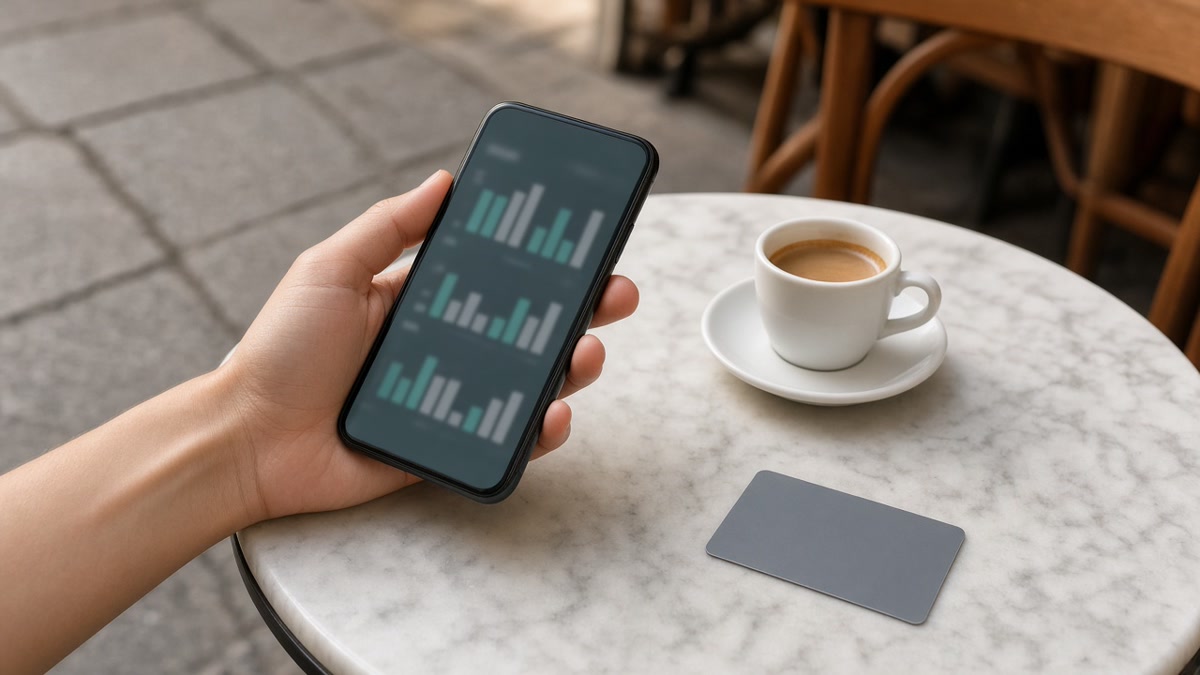
A hand holding a phone showing bar charts above a café table with an ID card and a coffee cup. · Bonusjungle illustration
Spain's gambling regulator has switched on one deposit limit that covers every licensed online operator a player uses: €700 a day, €1,750 a week and €3,300 per four weeks by default. A new Player Portal shows all of a player's activity in one place.
Spain now has a single deposit limit that applies across every licensed online gambling operator where a player holds an account. The Directorate General for the Regulation of Gambling (DGOJ), part of the Ministry of Social Rights, Consumer Affairs and 2030 Agenda, announced the system on 21 October 2026. It also launched a Player Portal that brings a player's online gambling activity together in one place.
Newest casinos
Added:
Welcome offer: 400% up to €8,000
35× B+D · €25
Added:
Welcome offer: 450% up to €9,000
35× B+D · €25
Added:
Welcome offer: 100% up to €500
35× bonus · €20


18+ · Affiliate links. We may earn a commission.
One limit instead of one per site
Until now, deposit limits in Spain were set separately by each operator, not per person. The DGOJ says this meant that a player with several accounts could deposit more in total than the limits intended, by spreading activity across sites. The new joint limit counts all of a person's deposits at all licensed operators together.
The default limits are:
- €700 per day
- €1,750 per week
- €3,300 per four-week period
The limits apply by default to everyone who plays. Players can change them or remove them voluntarily through a specific procedure that includes reinforced information about gambling risks. Limits set by individual operators remain in place as an additional layer.
The DGOJ highlights the group most affected. About a third of active online players in Spain use more than one operator; the government's June announcement put the figure at 31%. For them, a deposit at one site now counts towards the same daily, weekly and four-week totals as a deposit at another.
The waiting period and the three-month rule
Two safeguards slow down changes. Any change to or removal of a limit takes effect only after three working days, so that, in the DGOJ's words (our translation), the change is not immediate and impulsive behaviour is avoided. In addition, a player can raise the limit only once every three months.
The DGOJ manages the system itself. It has built a tool that checks compliance with the joint limits in real time. According to the regulator, this avoids unnecessary data exchanges between operators and better protects players' personal data.
What the Player Portal shows
The Player Portal is free. According to the release, it is open to all citizens, with or without a gambling account, through the Cl@ve identification system. The DGOJ's portal page describes it as a site for people who have a gambling account and have registered on it, and lists an electronic certificate, Cl@ve or the electronic DNI as login options.
Once logged in, a player can:
- see deposits, stakes, winnings and losses across licensed operators, with history and aggregate statistics;
- check which gambling accounts are linked to their identity, which helps spot possible identity theft at licensed operators;
- set personal alerts on spending and gambling activity (the portal page says these arrive by email when a threshold is passed);
- view and change their joint deposit limits, follow the status of requests and check that operators are applying them;
- download electronic activity certificates for full calendar years.
Testing now, in force from March 2027
The DGOJ says the joint-limit system is in a testing phase and enters definitively into force on 26 March 2027. It is nevertheless already fully available to users.
The Council of Ministers approved the royal decree behind the system on 23 June 2026, on a proposal from Minister Pablo Bustinduy. The decree also updates some technical rules for online gambling and requires operators to give players more information about available safer gambling tools.
Spain has been tightening other player checks too. From 28 October, operators must confirm that payment methods belong to the player, and the DGOJ has reopened consultation on its model for flagging at-risk players. For comparison, Britain's deposit-limit rules from 30 September apply account by account and do not create one shared allowance across sites.
Sources
- DGOJ / Ministry of Social Rights, Consumer Affairs and 2030 Agenda, "Consumo establece un límite global para los depósitos en el juego online y lanza el Portal del Jugador" (21 October 2026)
- DGOJ, "Portal del jugador" (portal information page)
- DGOJ, "El Gobierno aprueba un nuevo sistema de límites conjuntos de depósito para reforzar la seguridad de los jugadores online" (23 June 2026)
- SBC News (21 October 2026)
- European Gaming (21 October 2026)
- iGamingExpert (21 October 2026)