Regulation · 4 min
Latvia bill would raise gambling age to 21, cap online play
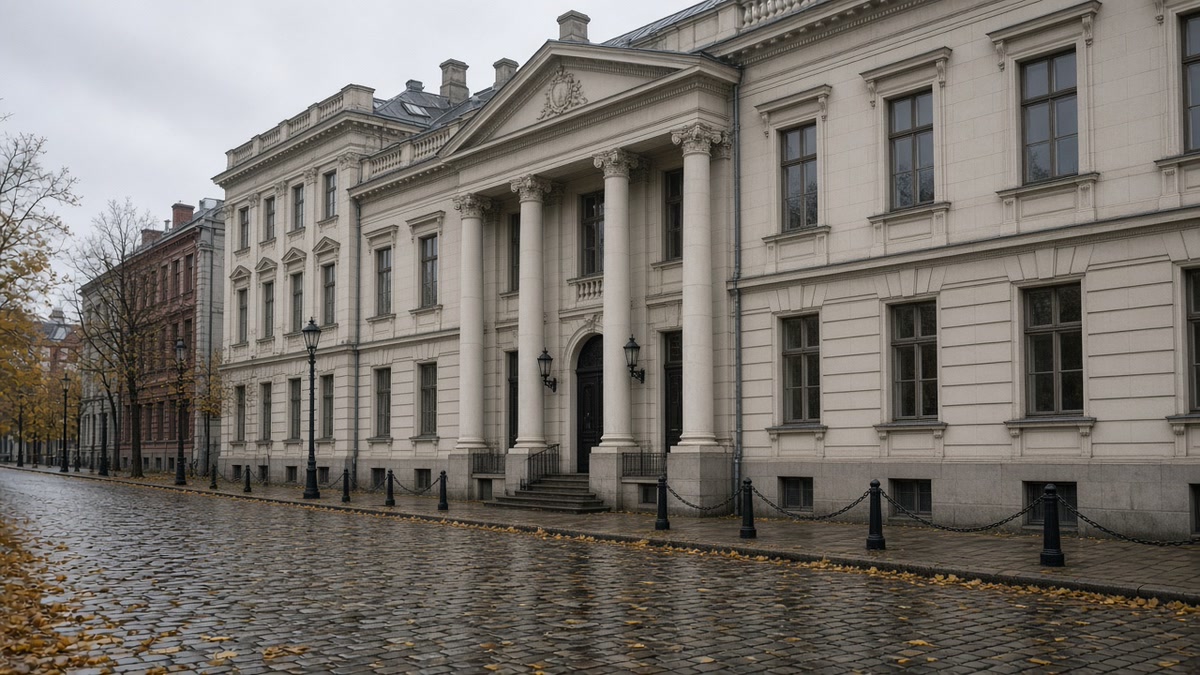
The Latvian parliament building in Riga on an overcast autumn morning. · Bonusjungle illustration
A Latvian parliamentary committee has backed a bill that would raise the gambling age from 18 to 21, limit online play to 21 hours in any 24 and bring in personalised player cards. Nothing is law yet: the newly elected parliament will decide.
Latvia is a step closer to a higher gambling age and tracked online play, but the decision now sits with a new parliament. On 21 October the Saeima's Budget and Finance (Taxation) Committee backed a Finance Ministry bill amending the Gambling and Lotteries Law for first reading. The Saeima is Latvia's parliament. Because Latvia elected a new one on 3 October, the committee is handing the bill to the incoming 15th Saeima to rework and decide.
That matters for timing. A committee backing a bill for first reading is an early step. The full parliament has not voted on it yet, it still has to pass further readings, and no date for the rules to take effect has been set.
Newest casinos
Added:
Welcome offer: 400% up to €8,000
35× B+D · €25
Added:
Welcome offer: 450% up to €9,000
35× B+D · €25
Added:
Welcome offer: 100% up to €500
35× bonus · €20



18+ · Affiliate links. We may earn a commission.
What the bill would change for players
- Gambling age 21. The minimum age for gambling would rise from 18 to 21. Lottery tickets could only be sold to adults (18+), according to LSM, LETA and iNews; SBC News reported 21+ for retail lottery purchases. Online lotteries already have the 18+ limit, LSM reports.
- A 21-hour limit online. Operators could not offer online gambling for more than 21 hours in any 24-hour period, counted across one continuous session or several separate ones.
- Personalised player cards. Playing would require a personalised card or a similar technical tool that records time played, money deposited and winnings. If it shows signs of addiction risk, the operator would have to restrict further play.
- Morning break at venues. Gambling venues would close between 6:00 and 9:00, except for totalisator and betting.
- Self-exclusion abroad. A player's self-exclusion could also apply in other EU countries, if Latvia agrees data exchange with them, Latvian public broadcaster LSM reports.
For venues, the bill would also extend visitor registration beyond casinos, require CCTV footage to be kept for at least 30 days instead of seven, raise the minimum number of machines per gaming hall from 20 to 25 and set uniform rules for façades, shop windows and signs.
Why the time limit matters less than the tracking
By our arithmetic, a 21-hour cap only forces a break of at least three hours a day. Few players get anywhere near it: the licensed operators' association says, citing its members, that only five or six people a year play that long. For most players the bigger change would be the tracking behind it. A card that adds up time, deposits and winnings is what would let an operator step in long before the hours become the problem. Spain took a different route this month with joint deposit limits across operators.
Pushback from both sides
The Finance Ministry's Jana Salmiņa told the committee the bill was a compromise reached over long discussions; work on it began in 2019, and the Saeima sent it to the committee on 26 September 2024. Some of the original ideas, such as a ban on free alcohol, are already in force.
The committee's chair, Aiva Vīksna of United List, said the proposal is out of date but that this was no reason to start from zero. She asked the next Saeima to improve it substantially, with particular attention to illegal online gambling.
The Latvian licensed gambling association wants it rewritten. Its representative Emīls Jonins said the bill does not set out how to fight the illegal market effectively. By industry estimates, the licensed online market was worth about EUR 170 million last year and the illegal market about EUR 62 million. The association also warns that raising the age to 21 could push some young players to illegal sites, and estimates that the 25-machine minimum could close about 30 gaming halls and cost 240 jobs. These are industry figures, not official ones. The Latvian Chamber of Commerce and Industry backs individual risk monitoring but opposes the higher machine minimum, the online time limit and the extra data requirements.
From the other direction, the party Kustība Par! wrote to the committee that the government's plan is too soft. It proposes, among other things, banning gaming halls in residential buildings and sports facilities and requiring at least 40 machines per hall.
What happens next
Whether the 15th Saeima takes the bill up, which parts it keeps and when anything could take effect is not yet known. Players in Latvia can already self-exclude from gambling today; the bill would keep that and could extend it to other EU countries. Elsewhere in the Baltics, Lithuania's regulator has been blocking unlicensed sites such as Polymarket.
Sources
- LSM (Latvian Radio, Agnija Lazdiņa), "15. Saeimai ceļamaizē atstāj lemšanu par stingrākiem azartspēļu ierobežojumiem", 21 October 2026
- Jauns.lv / LETA, "Latvijā plāno būtiski ierobežot azartspēles – mainīsies gan vecuma, gan darba laika nosacījumi", 21 October 2026
- iNews.lv (Anna Ozola), "Stingrākos azartspēļu ierobežojumus Budžeta komisija atstāj lemt 15. Saeimai", 21 October 2026
- SBC News (Ted Menmuir), "Latvia to vote on enhanced gambling restrictions", 22 October 2026
- Saeima, register of draft laws of the 14th Saeima (bill No. 705/Lp14)